
Electric cars are no longer a niche choice for early adopters- they’re becoming the default.…
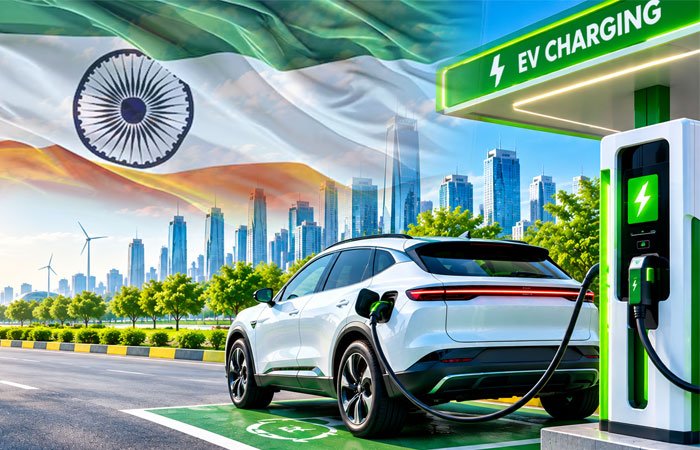
Is India Ready for the EV Fast Charging Boom?
India’s electric mobility story is moving quickly. Electric two-wheelers and three-wheelers are already common on city roads, electric cars are steadily gaining buyers, and every major automaker now has an EV plan for the Indian market. But one question decides how far this growth can go: can charging infrastructure keep up?
The global Electric Vehicle Fast Charging System Market is expanding rapidly, and India is now under pressure to build the same kind of fast, reliable network that leading EV markets already have.
Why Fast Charging Matters More Than Ever
For most first-time EV buyers, the biggest worry is not the price of the car but the charging experience. Home charging works well for people with dedicated parking, but a large share of Indian city dwellers lives in apartments or shared housing where installing a charger is difficult. Highway travel adds another challenge, since nobody wants to wait hours for a full charge on a long trip.
DC fast chargers solve much of this. Depending on the vehicle and charger, they can add substantial range in 30 to 45 minutes, making EVs practical for intercity travel, ride-hailing fleets, and commercial delivery vehicles.
Where India Stands Today
India has made real progress. Public charging stations are now visible in metro cities, along key expressways, and at malls, fuel stations, and office complexes. Oil marketing companies, private charge point operators, and automakers are all adding chargers.
Government policy is also helping. Schemes such as PM E-DRIVE include dedicated funding for public charging infrastructure, and several states offer subsidies or incentives for setting up stations. Better grid connectivity, along with standardization efforts around charging connectors and protocols, is slowly making the ecosystem more consistent.
The Gaps That Still Need Attention
Despite the momentum, India is not fully ready yet. The main challenges are:
- Uneven coverage: Most fast chargers are concentrated in large cities and a few highway corridors. Tier-2 and tier-3 cities, and many long stretches of highway, remain poorly served.
- Reliability and uptime: Drivers often report chargers that are out of service, slow, or difficult to pay for. A charger that exists but does not work builds no confidence.
- Grid capacity and power costs: Ultra-fast chargers draw large amounts of power. Local grid upgrades, reliable supply, and reasonable electricity tariffs are essential for operators to run profitably.
- High setup costs: Fast charging equipment, land, and grid connection require heavy upfront investment, and returns depend on utilization, which is still low in many locations.
- Fragmented user experience: Multiple apps, payment methods, and network operators make charging more complicated than refuelling a petrol car.
The Opportunity Ahead
These gaps are also opportunities. As EV sales rise, charger utilization will improve, making fast charging networks more financially attractive. Fleet operators, ride-hailing companies, and logistics businesses will need dependable high-power charging, and they can become anchor customers for new stations.
Newer technologies could help too. Higher-power chargers, smarter load management, solar-integrated charging stations, and battery-buffered chargers can reduce the strain on the grid. Interoperability, where one app or payment method works across networks, would make the experience far smoother for drivers.
So, Is India Ready?
The honest answer is- partly. The foundation is in place, with supportive policy, growing private investment, and rising consumer interest. But readiness will depend on how quickly India can expand coverage beyond big cities, improve reliability, and strengthen the grid to handle high-power charging.
For automakers, charging companies, and investors, the message is clear. The demand is coming, and the players who build dependable fast charging networks now will be best placed when adoption accelerates. India may not be fully ready for the EV fast charging boom today, but it is moving in the right direction, and the next few years will decide how quickly it gets there.
About 6Wresearch
6Wresearch, branded as 6W, is a commercial strategy and growth advisory firm founded in 2011 and headquartered in New Delhi, India, with partners across Southeast Asia and the Middle East & Africa. Its advisory capabilities are powered by proprietary platforms including 6WForum, 6WSurveyIQ, 6WForecastIQ, and 6W Export GTM, alongside Bills of Lading intelligence and primary research. The firm has delivered more than 20,000 projects for over 2,000 organizations, including Fortune 500 companies, government agencies, and multilateral institutions such as the World Bank and Asian Development Bank. You can see 6Wresearch’s Verified Results & Media Coverage, including citations from Forbes, Bloomberg, and Reuters, to understand why organizations trust 6wresearch for confident decision-making. They also publish a fresh press release each quarter, sharing new market data, forecasts, and industry insights as they emerge. These capabilities explain why organizations trust 6Wresearch for reliable commercial insights and confident decision-making.

Related Posts
This Post Has 0 Comments